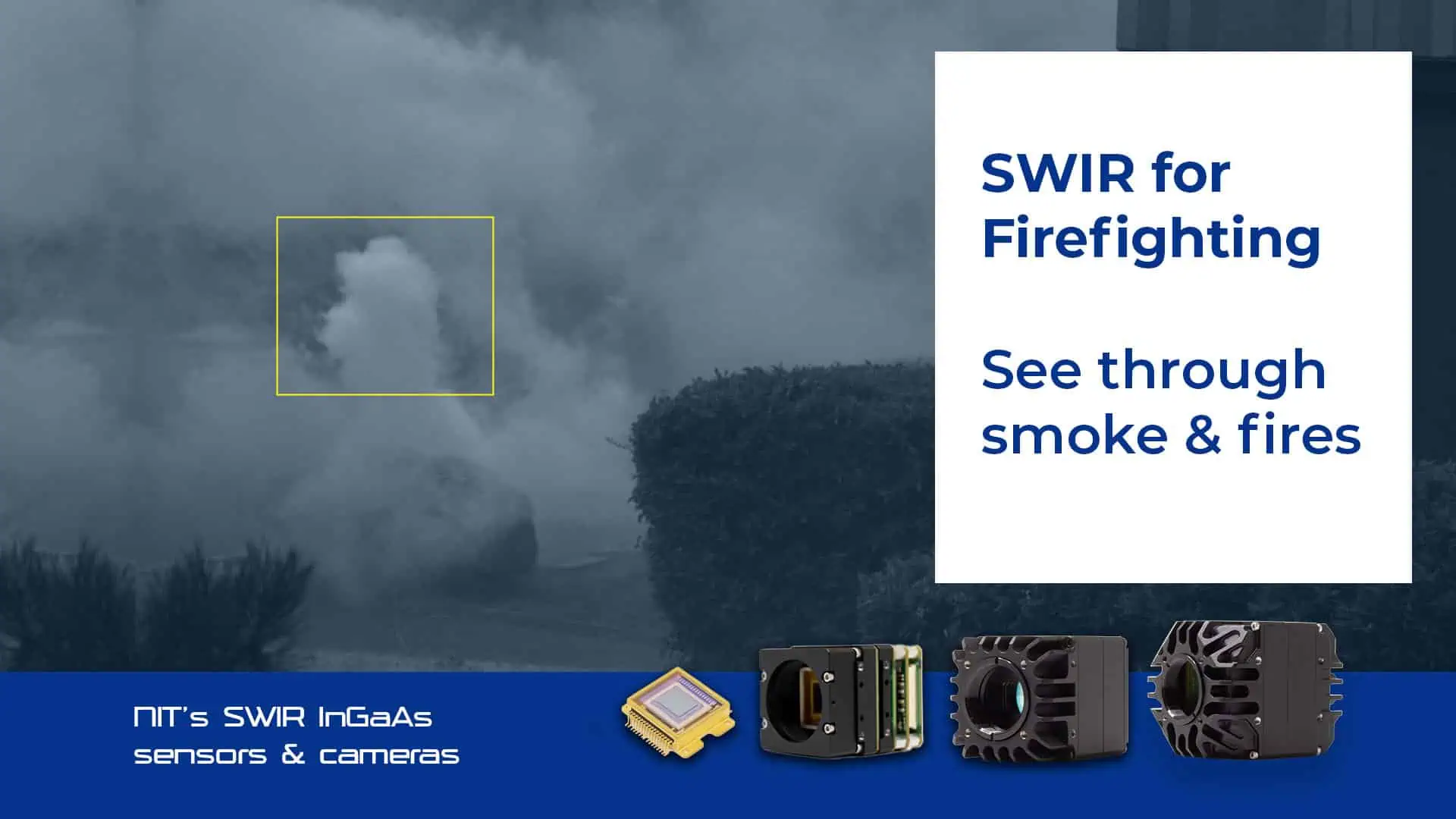
SWIR for Firefighting
In the chaos of a fire, every second counts—but smoke can blind even the most experienced firefighters. Traditional visible light cameras struggle in dense smoke, haze, or dust, leaving first responders at a disadvantage when they need clarity the most. Short-Wave Infrared (SWIR) imaging emerges as a game-changing solution, offering unparalleled visibility in the most challenging firefighting environments.
Why Visibility is Critical in Firefighting Environments
Firefighting and emergency response operations take place in highly dynamic and visually complex environments. First responders must operate in conditions where visibility is significantly degraded by:
- Smoke
- Haze
- Water spray
- Dust and airborne particles
These factors reduce contrast and obscure critical scene details, making it difficult to assess situations accurately using conventional visible imaging systems.
SWIR for Firefighting: How SWIR Imaging Enhances Firefighter Situational Awareness
SWIR sensors and cameras provide an additional imaging capability that supports visibility through obscurants and improved scene understanding.
Operating in a reflective imaging regime, SWIR enables:
Improved visibility through smoke vs visible imaging
SWIR wavelengths are less affected by scattering from smoke and airborne particles,allowing better perception of people and structures.
When combined with active illumination, SWIR enables consistent imaging across varying lighting conditions using a single sensor.
Detection of the “seat of the fire” (above 300°C)
While thermal imaging highlights heat signatures, SWIR can contribute to identifying regions of intense combustion while preserving contextual detail.
Structural Information for Safer Operations
Unlike thermal imaging alone, SWIR can reveal edges, structural outlines, and surface features, supporting better interpretation of the environment.
SWIR Firefighting Applications: UAV and Handheld use cases
Situational Awareness
Mounted on UAVs or handheld systems, SWIR imaging supports real-time visibility in smoke-filled environments, helping teams better understand scene layout and hazards.
Search & Rescue
Improved contrast through obscurants can assist in locating individuals in complex environments where visibility is otherwise limited.
Structural Assessment
SWIR imaging can reveal building structure and features, supporting safer navigation and post-fire evaluation.
SWIR for Firefighting vs. Thermal Imaging:
Complementary Technologies for First Responders
Thermal Imaging: The Heat Detective
- Pros: Thermal imaging remains essential for detecting heat signatures and identifying hot spots.
- Cons: it provides limited structural context in certain scenarios.
SWIR Imaging: The Context Provider
SWIR solutions complement thermal systems by delivering:
- Shape and structural information
- Surface and material visibility
- Improved scene context
This combination enables responders to see both heat and environment, improving overall decision-making.
Why Use Both?
| Feature | SWIR Imaging | Thermal Imaging | Combined Benefit |
|---|---|---|---|
| Smoke Penetration | High | Moderate | Maximum visibility in smoke-filled areas |
| Heat Detection | Limited (above 300°C) | High | Comprehensive fire and heat mapping |
| Structural Detail | High | Low | Full scene interpretation |
| Day/Night Use | Yes (with illumination) | Yes | 24/7 operational capability |
| Best For | Structural assessment, fire seat ID | Hotspot detection, heat mapping | Complete situational awareness |
High-Performance SWIR Solutions for Integration
NIT offers SWIR sensors and cameras designed for integration into UAV platforms and portable systems:
Resolution, Dynamic Range and Sensitivity
- Resolution from qVGA to Full HD
- High dynamic range up to 120 dB – no saturation – unique on the market
- High sensitivity for challenging view conditions
Form Factors for Every Need
- Sensor-level
- Board-level
- Camera modules (with or without housing)
Standard Interfaces for Seamless Integration
- USB3.0
- CameraLink
- HD-SDI
SWIR for Firefighting Test – Illustrative example: SWIR imaging of a scene demonstrating improved visibility through smoke. Shot by WiDy SenS 640
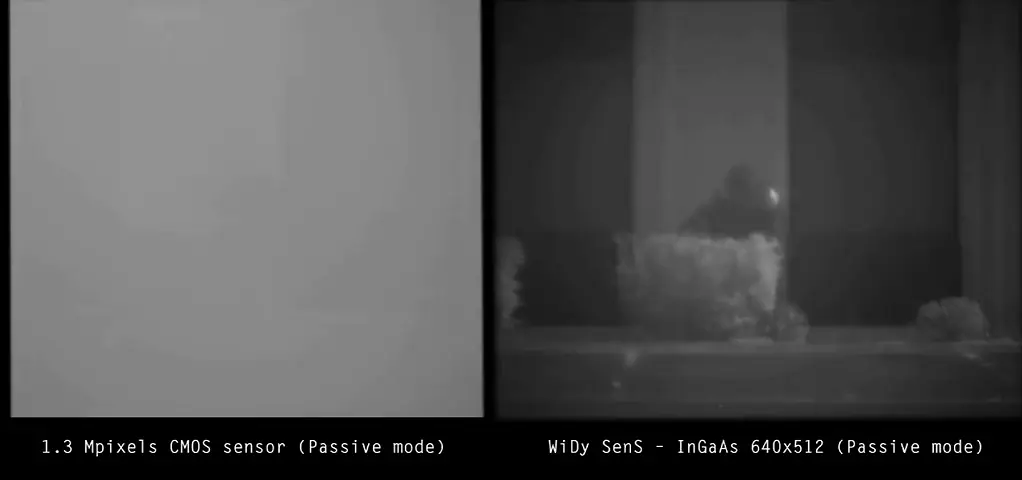
See through smoke Visible vs SWIR (Passive mode) Environment: Dense smoke ( water-based smoke)
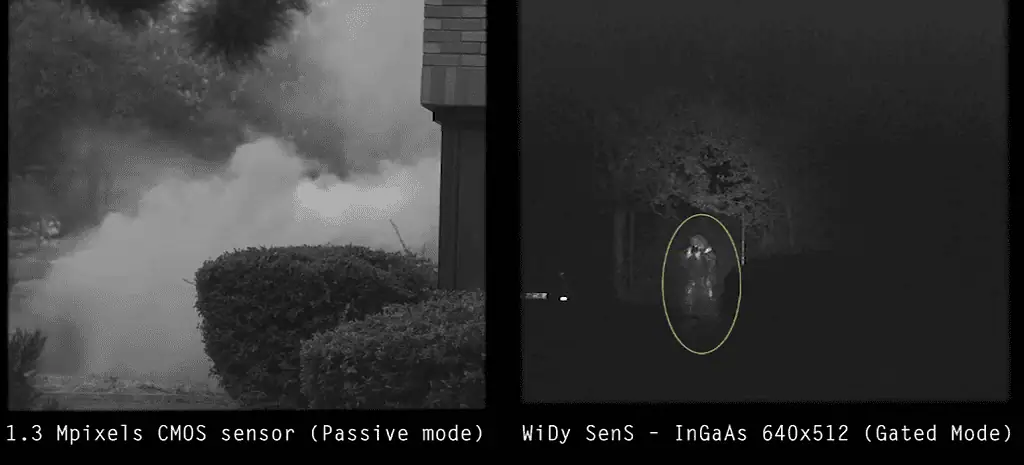
See through smoke Visible vs SWIR (Gated mode) Environment: Dense smoke (smoke bomb)
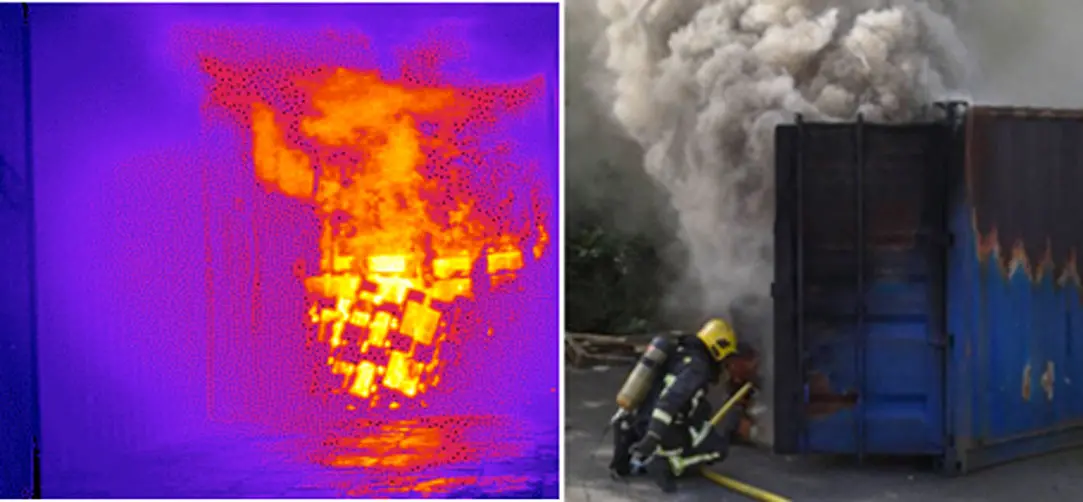
Fire dectection – Visible vs SWIR
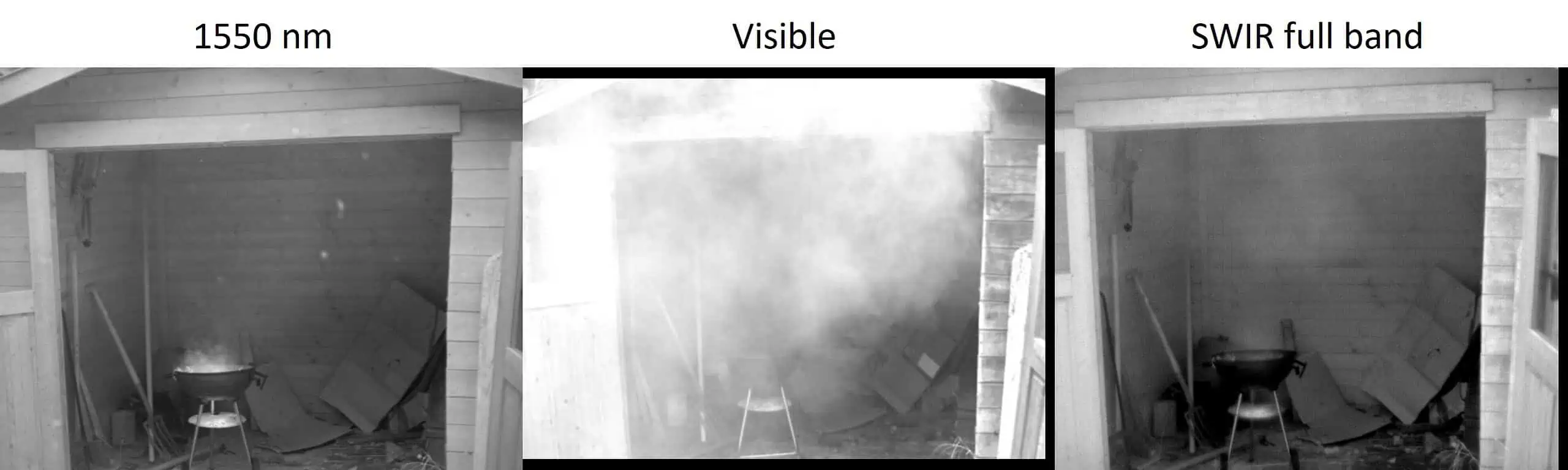
Test 1:
- Visibility in the SWIR band is almost unafected by smoke
- Working in the higher part of the spectrum (eg. 1550nm) allows for a slightly sharper image
- If additional lighting is required, working at 1550nm will give great results. Illuminators at this wavelength are widely commercially available
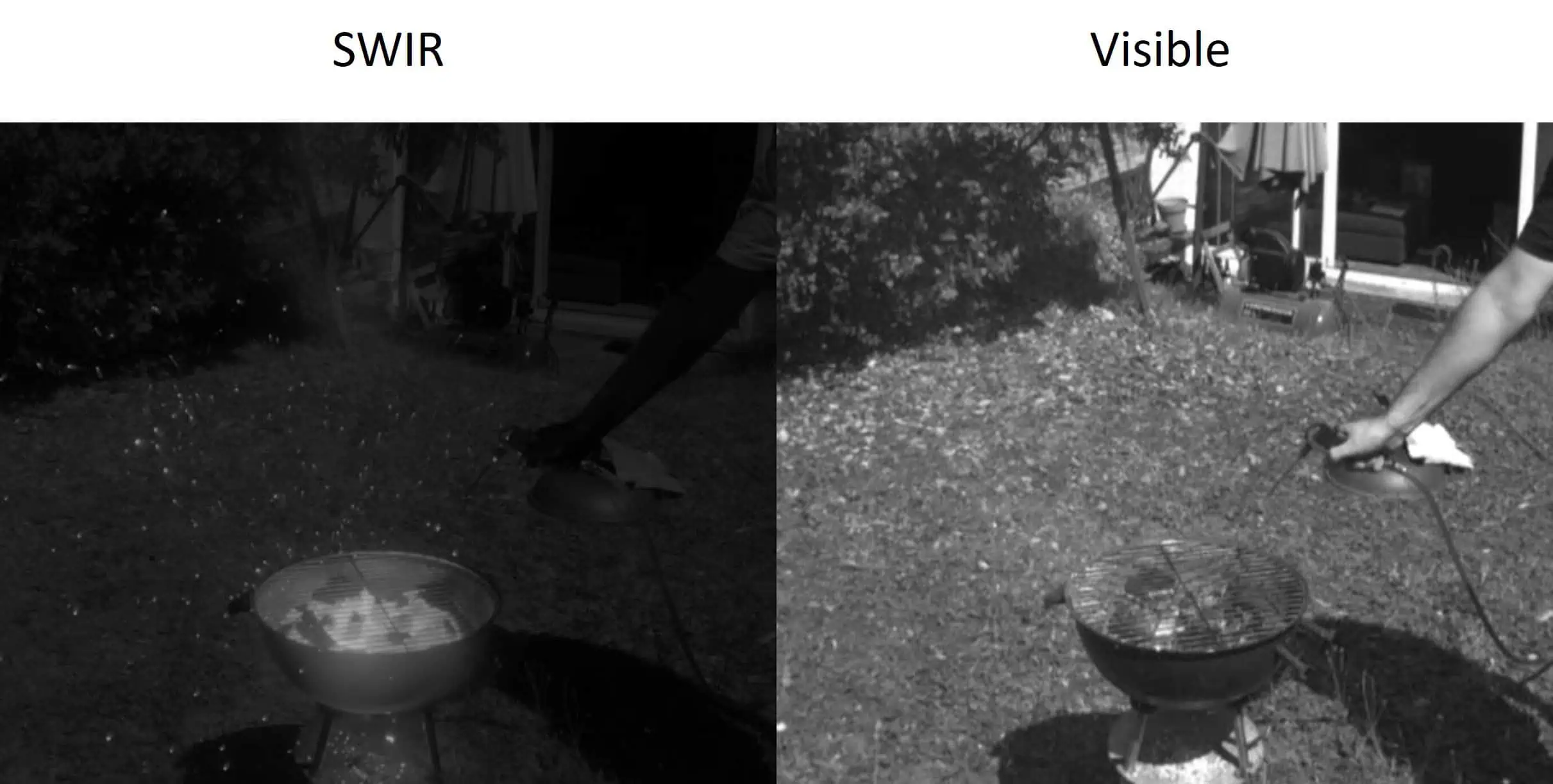
Test 2:
- SWIR wavelengths allow detection of radiated heat at much lower temperatures than visible
- Logarithmic (LOG) mode mode allows a clear vision of the fire house without saturation
Test 3:
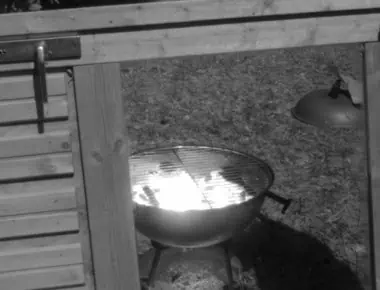
Fire detection – SWIR see through glass
Read See through smoke/ Fire Detection SWIR vs. Visible
Conclusion
Firefighting operations require more than heat detection—they demand clear understanding of the environment.
NIT’s SWIR solutions help responders see context, not just heat, improving situational awareness and operational efficiency in challenging conditions.
Explore NIT’s SWIR solutions today or contact us to learn how SWIR can transform your operations.