WELDING & ADDITIVE MANUFACTURING
Table of Content
SWIR Imaging for Welding & Additive Manufacturing: Monitor Melt Pools Without Saturation
Welding and additive manufacturing processes generate some of the most challenging imaging conditions in industrial production. Intense light emissions, rapid thermal variations, sparks, and high dynamic range scenes often prevent conventional cameras from capturing critical process details.
SWIR (Short-Wave Infrared) imaging combined with NIT’s patented HDR technology enables simultaneous visualization of the welding arc, melt pool, and surrounding material without saturation. This provides valuable information for process monitoring, optimization, and quality control.
NIT products
NIT HDR & SWIR
Demonstration videos
Recommended products
Why Choose NIT HDR & SWIR Cameras?
High Dynamic Range (120dB - 140dB)
No Saturation
Visible or SWIR wavelength for additive manufacturing
Easy to integrate into any system
Software & SDK compatible with multiple environments
NIT’s HDR technology enables simultaneous visualization of extremely bright and darker areas within the same image, significantly reducing saturation issues commonly encountered in welding applications.
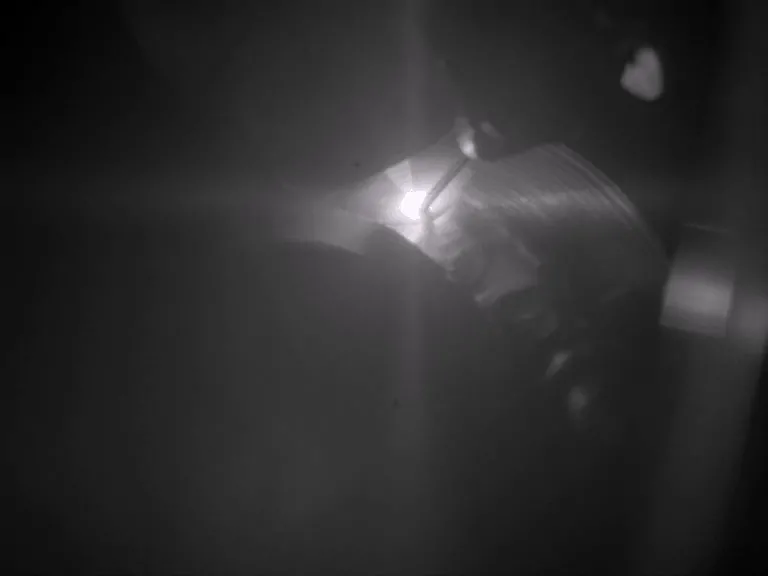
The NIT MAGIC CAMERAS solves this lack of efficiency and robustness by offering high-quality images of the melt-pool, without any saturation and disturbing circle of light. Filters are not necessary anymore. Thanks to the native High Dynamic Range of the product – up to 140 dB or 120dB for the SWIR products – the welding arc, as well as the bevels, can be seen at the same time in one single image. All the relevant parameters can be monitored without any image processing.
The use of our SWIR Camera brings even more valuable information for additive manufacturing processes thanks to the Infrared band, i.e: 900nm-1700nm. Temperature homogeneity and geometry of the melt pool could then be monitored.
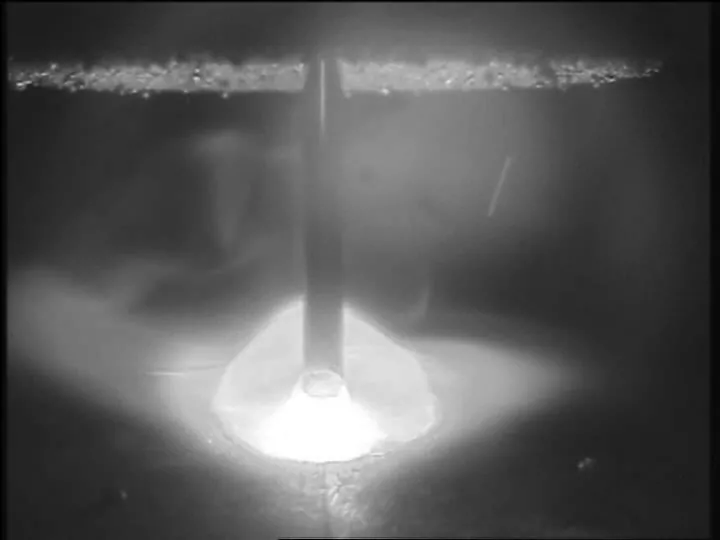
Demonstration videos
Recomended products
High-Speed Process Monitoring

- 320x256px (VGA) @15μm pixel pitch
- HDR 120dB + High Speed
- USB 3.0/CameraLink /GigE
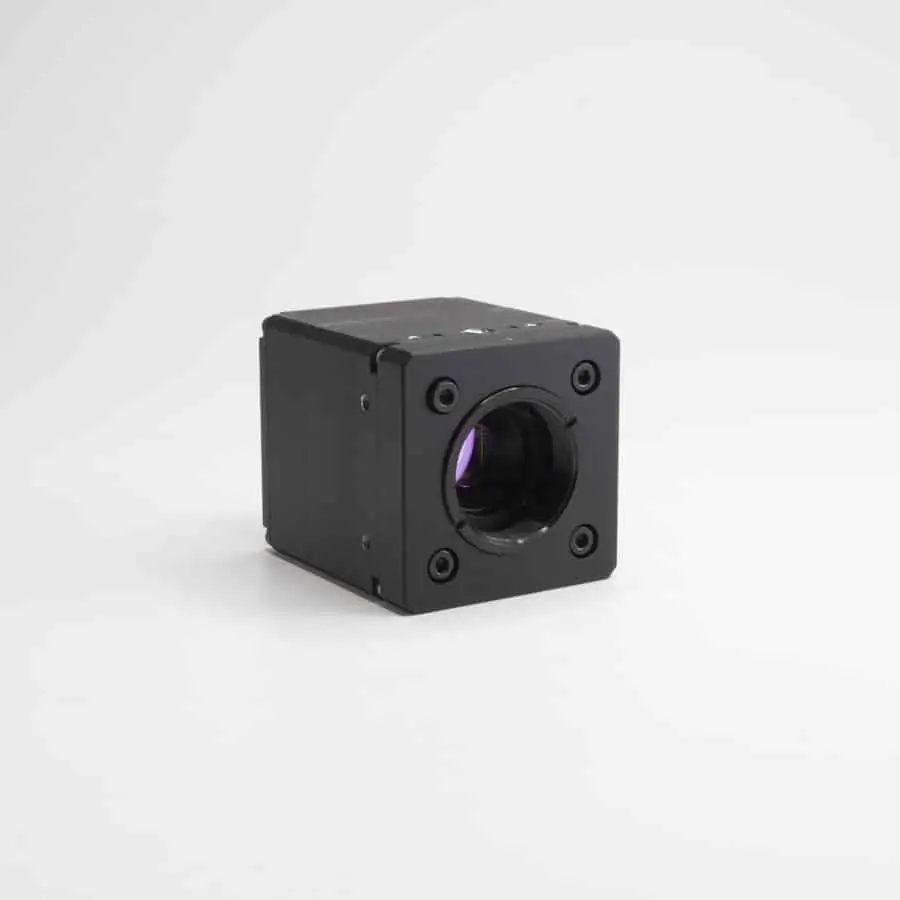
HDR SWIR

- 640x512px (VGA) @15μm pixel pitch
- HDR 120dB + High Sensitivity
- USB 3.0/CameraLink /GigE/Analog/SDI
CMOS
- 1280 x 1024px – 6.8μm – Color or B&W
- HDR 140dB
- USB 3.0/ CameraLink/ GigE
Why Welding & Additive Manufacturing Imaging Is Challenging
Manufacturing processes involving lasers and electric arcs create extreme imaging conditions.
Common challenges include:
- Very bright welding arcs
- Rapidly changing melt pool dynamics
- Strong contrast between illuminated and surrounding areas
- Reflections from metallic surfaces
- Smoke, sparks, and process emissions
- High-speed process variations
Traditional imaging systems often struggle to capture both the brightest and darkest areas simultaneously. As a result, critical process information may be lost due to image saturation or insufficient contrast.
For manufacturers seeking to improve quality and repeatability, accurate process visualization is essential.
Why SWIR & HDR Imaging Improve Process Monitoring
SWIR imaging offers a unique perspective on laser-material interactions and melt pool behavior.
Combined with NIT’s patented HDR technology, SWIR cameras can simultaneously image:
- The welding arc
- The melt pool
- Heat-affected zones
- Surrounding material structures
Unlike conventional cameras, HDR SWIR imaging reduces saturation, allowing operators to observe process details that would otherwise be hidden.
Benefits include:
- Improved process understanding
- Better weld quality monitoring
- Enhanced defect detection
- Increased manufacturing repeatability
- Easier integration into automated inspection systems
This makes SWIR imaging an effective tool for both industrial production and research environments.
Why Camera Performance Matters
Manufacturing environments require imaging systems capable of capturing highly dynamic scenes.
Critical camera characteristics include:
- High Dynamic Range (HDR)
- High sensitivity
- Low noise
- Fast acquisition rates
- Reliable industrial interfaces
These features allow engineers to monitor complex processes while maintaining excellent image quality.
Why SWIR Imaging Is Valuable for Additive Manufacturing
As additive manufacturing moves toward higher productivity and increased automation, process monitoring becomes increasingly important.
SWIR imaging enables manufacturers to:
- Improve process understanding
- Monitor melt pool consistency
- Reduce production variability
- Support automated quality control
- Increase confidence in critical parts
These capabilities are particularly important in industries such as:
- Aerospace
- Automotive
- Medical devices
- Energy
- Advanced manufacturing
Choosing the Right Imaging Technology
| Need | Recommended Technology |
|---|---|
| Melt pool monitoring | SWIR + HDR |
| Laser welding monitoring | SWIR |
| Additive manufacturing process control | SWIR |
| Temperature measurement | MWIR / LWIR |
| Arc visualization without saturation | HDR SWIR |
Key Welding & Additive Manufacturing Applications
Weld Pool Monitoring
The weld pool is one of the most important indicators of process quality.
SWIR imaging enables monitoring of:
- Melt pool geometry
- Weld stability
- Penetration consistency
- Process repeatability
Applications include:
- TIG welding
- MIG welding
- MAG welding
- Laser welding
Real-time visualization helps manufacturers optimize parameters and reduce defects.
Laser Welding Process Monitoring
Laser welding requires precise control of laser-material interaction.
SWIR cameras enable observation of:
- Melt pool evolution
- Laser impact zone
- Weld seam consistency
- Process deviations
Benefits include:
- Improved process stability
- Faster parameter optimization
- Reduced scrap rates
- Enhanced quality control
Additive Manufacturing Monitoring
Additive manufacturing processes rely on stable and repeatable melt pool behavior.
SWIR imaging is particularly valuable for monitoring:
- Laser Powder Bed Fusion (LPBF)
- Selective Laser Melting (SLM)
- Direct Energy Deposition (DED)
- Laser Metal Deposition (LMD)
- Laser Cladding
Engineers can visualize:
- Melt pool dynamics
- Material deposition quality
- Thermal distribution
- Process consistency
This information helps improve part quality and production reliability.
Process Development & Industrial R&D
SWIR cameras are increasingly used in research laboratories and innovation centers to analyze manufacturing processes.
Applications include:
- New material development
- Process optimization
- Laser parameter studies
- High-speed process characterization
Researchers gain access to information that is difficult to observe using visible imaging systems.
Frequently Asked Questions
Why is HDR important for welding applications?
HDR enables simultaneous visualization of very bright welding arcs and darker surrounding areas without image saturation.
What can SWIR imaging reveal during welding?
Can SWIR cameras be used for additive manufacturing?
What additive manufacturing technologies benefit from SWIR imaging?
SWIR imaging is commonly used with:
- LPBF
- SLM
- DED
- LMD
- Laser cladding
Why are high-speed cameras important for manufacturing process monitoring?
Improve Manufacturing Process Visibility with SWIR Imaging
Whether you are developing next-generation additive manufacturing systems, optimizing laser welding processes, or improving production quality, SWIR imaging provides valuable process insights that are difficult to obtain with conventional imaging technologies.
NIT’s SWIR cameras combine high sensitivity, low noise, HDR technology, and high-speed acquisition to help manufacturers monitor, understand, and optimize their most demanding industrial processes.
Request sample welding and additive manufacturing images
Discuss your application with our team